Pourquoi savoir lire l'étiquette d'un complément
Avec des milliers de compléments alimentaires sur le marché, comprendre une étiquette de complément fait partie des compétences les plus utiles pour quiconque prend des vitamines, minéraux ou autres produits nutritionnels. L'étiquette est votre principale source d'information sur ce que vous mettez dans votre corps.
La FDA américaine impose à tous les fabricants d'inclure un panneau Supplement Facts sur leurs produits. Ce panneau suit un format standardisé, ce qui facilite grandement la comparaison entre produits — une fois que vous savez quoi regarder.
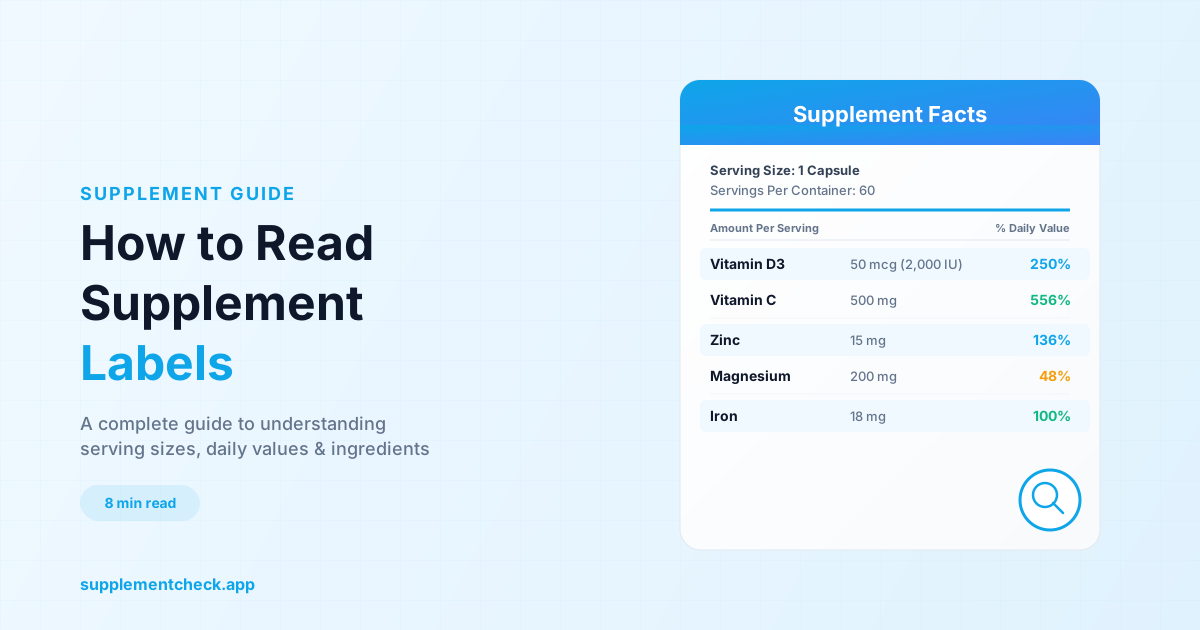
Comprendre le panneau Supplement Facts
Portion (Serving Size) et nombre de portions par contenant
La première information sur n'importe quelle étiquette est la portion (Serving Size). Elle indique la quantité de produit qui constitue une dose : « 1 gélule », « 2 comprimés » ou « 1 dosette (5 g) ».
C'est essentiel, car toutes les quantités de nutriments listées en dessous sont rapportées à cette portion. Si la portion est de 2 gélules mais que vous n'en prenez qu'une, vous n'obtenez que la moitié des doses listées.
Servings Per Container (portions par contenant) indique combien de portions contient le flacon. Cela permet de calculer combien de temps il dure et son coût réel par portion.
Pourcentage de la valeur quotidienne (% Daily Value)
La colonne % Daily Value (%DV) indique quelle proportion de l'apport journalier recommandé chaque nutriment couvre. Ces valeurs sont basées sur un régime de 2 000 kcal pour adultes et enfants à partir de 4 ans.
- Moins de 5 % DV est considéré comme faible
- 20 % DV ou plus est considéré comme élevé
Gardez en tête que certains nutriments comme la vitamine D ou le magnésium sont souvent sous-consommés ; un %DV plus élevé peut alors être bénéfique. Pour d'autres comme le sodium, mieux vaut un %DV bas.
La liste des ingrédients
Sous le panneau Supplement Facts, vous trouverez la section Other Ingredients (autres ingrédients). Elle liste tout ce qui n'est pas un nutriment :
- Charges (fillers) — ajoutées pour donner du volume au produit (farine de riz, maltodextrine)
- Liants — maintiennent le comprimé (cellulose, acide stéarique)
- Enrobages — facilitent l'avalage (shellac, cire de carnauba)
- Conservateurs — prolongent la durée de conservation (BHT, benzoate de sodium)
- Colorants — naturels ou artificiels (dioxyde de titane, jus de betterave)
- Arômes — naturels ou artificiels
Les ingrédients sont listés par poids décroissant : le premier est donc présent en plus grande quantité.
Signaux d'alerte à surveiller
Lorsque vous lisez une étiquette de complément, méfiez-vous de :
- Mélanges propriétaires (Proprietary Blends) — Ils regroupent plusieurs ingrédients et n'indiquent que le poids total, ce qui empêche de connaître les quantités individuelles. Souvent utilisé pour cacher des dosages insuffisants.
- Colorants et arômes artificiels — Globalement reconnus comme sûrs, beaucoup de consommateurs soucieux de leur santé préfèrent les éviter.
- Doses excessives — Certains compléments fournissent 1 000 % ou plus de la valeur quotidienne. Pour les vitamines hydrosolubles comme la vitamine C, l'excès est éliminé. Mais pour les vitamines liposolubles (A, D, E, K), un excès peut s'accumuler et devenir potentiellement toxique.
- Absence de tests indépendants — Cherchez les certifications NSF International, USP (United States Pharmacopeia) ou ConsumerLab, qui vérifient que le produit contient bien ce qu'il annonce.
Comment Supplement Scanner vous aide
Lire une étiquette peut être long et déroutant. C'est exactement pour cela que nous avons créé Supplement Scanner. Scannez simplement le code-barres avec l'appareil photo de votre téléphone, et notre IA analyse instantanément :
- Score de sécurité (0-100) — Évaluation globale de la sécurité
- Qualité des ingrédients — Note de chaque ingrédient
- Interactions potentielles — Avertissements en cas de combinaisons
- Détection de charges — Repère les additifs inutiles
- Biodisponibilité — Capacité de votre corps à absorber les nutriments
Plutôt que de passer plusieurs minutes à décoder une étiquette, obtenez des analyses claires en quelques secondes.
À retenir
- Vérifiez toujours la portion avant de regarder les quantités de nutriments
- Utilisez le %DV pour savoir si un niveau est faible (moins de 5 %) ou élevé (plus de 20 %)
- Lisez la section « Other Ingredients » pour repérer charges et additifs
- Méfiez-vous des mélanges propriétaires qui cachent les quantités individuelles
- Cherchez les certifications de tests indépendants
- Utilisez des outils comme Supplement Scanner pour analyser rapidement n'importe quel produit
Comprendre vos étiquettes de compléments vous permet de faire de meilleurs choix pour votre santé. Plus vous êtes informé, mieux vous décidez de ce que vous mettez dans votre corps.