Warum Wechselwirkungen bei Supplements wichtig sind
Mehrere Supplements gleichzeitig einzunehmen ist heute ganz normal. Studien zeigen, dass über 50 % der Erwachsenen in den USA mindestens ein Nahrungsergänzungsmittel nehmen — viele sogar mehrere. Einzeln können Supplements gesundheitlich nützen, aber unbedacht kombiniert können sie ihre Wirkung verlieren oder sogar schaden.
Anders als verschreibungspflichtige Medikamente werden Supplements nicht systematisch auf Wechselwirkungen geprüft. Deshalb ist es besonders wichtig zu wissen, welche Kombinationen man besser meidet.
Häufige Wechselwirkungen, auf die Sie achten sollten
Calcium und Eisen
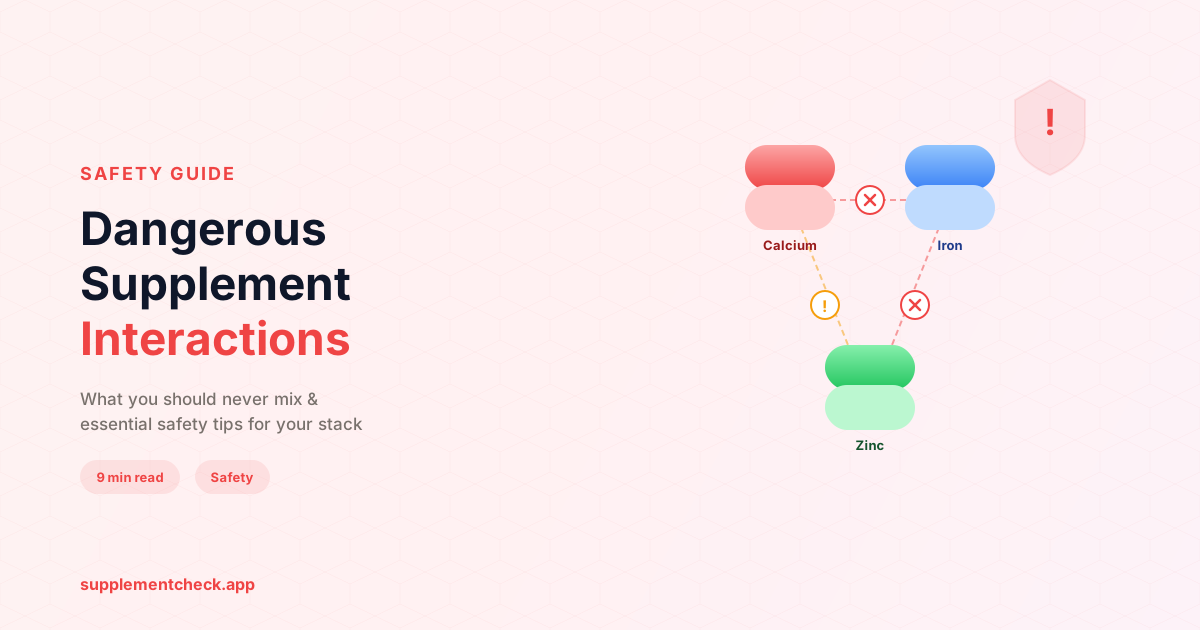
Eine der am besten dokumentierten Wechselwirkungen: Calcium kann die Eisenaufnahme um bis zu 50 % hemmen. Wer beides nimmt:
- Zu unterschiedlichen Zeiten einnehmen — Eisen morgens, Calcium abends
- Mindestens 2 Stunden Abstand lassen
- Eisen wirkt am besten auf nüchternen Magen, Calcium kann zum Essen genommen werden
Vitamin C und Vitamin B12
Vitamin C ist grundsätzlich nützlich, aber hohe Dosen (über 1.000 mg) können gleichzeitig eingenommen die B12-Aufnahme verringern. Das saure Milieu kann B12 abbauen, bevor es resorbiert wird.
- Lösung: Vitamin C und B12 mit mindestens 2 Stunden Abstand einnehmen
Zink und Kupfer
Zink und Kupfer konkurrieren um dieselben Aufnahmewege im Dünndarm. Hohe Zinkdosen (über 40 mg pro Tag) können langfristig zu Kupfermangel führen — mit möglichen Folgen wie Anämie und Immunschwäche.
- Lösung: Bei langfristiger Zink-Supplementierung etwas Kupfer ergänzen (üblich: 2 mg Kupfer pro 15 mg Zink)
Fischöl und blutverdünnende Supplements
Fischöl (Omega-3-Fettsäuren) wirkt natürlich blutverdünnend. In Kombination mit anderen blutverdünnenden Substanzen steigt das Blutungsrisiko:
- Vitamin E (in hohen Dosen)
- Ginkgo biloba
- Knoblauch-Supplements
- Kurkuma/Curcumin
Wer blutverdünnende Medikamente (z. B. Warfarin) nimmt, sollte vor jeder dieser Kombinationen mit der Ärztin oder dem Arzt sprechen.
Vitamin E und Vitamin K
Vitamin E in hohen Dosen kann die Rolle von Vitamin K bei der Blutgerinnung beeinträchtigen. Vitamin K ist für eine ordnungsgemäße Gerinnung essenziell, übermäßiges Vitamin E wirkt gegen.
- Lösung: Bei den empfohlenen Dosen von Vitamin E bleiben (15 mg/Tag für Erwachsene)
Johanniskraut und mehrere Supplements
Johanniskraut gehört zu den Substanzen mit den meisten Wechselwirkungen. Es kann die Wirkung von vielen anderen Mitteln verändern:
- 5-HTP und SAMe — Die Kombination dieser serotonin-wirksamen Substanzen kann zum potenziell gefährlichen Serotonin-Syndrom führen
- Eisen — Johanniskraut kann die Eisenaufnahme verringern
- Folsäure — Wirkung kann reduziert sein
Magnesium und Antibiotika
Strenggenommen keine Supplement-Supplement-Wechselwirkung, aber wichtig: Magnesium kann an bestimmte Antibiotika (Tetracycline, Fluorchinolone) binden und ihre Wirkung um bis zu 90 % verringern.
- Lösung: Magnesium mindestens 2–4 Stunden vor oder nach dem Antibiotikum einnehmen
Kombinationen, die die Wirksamkeit mindern
Manche Kombinationen schaden nicht, sind aber rausgeworfenes Geld, weil sie die Aufnahme reduzieren:
Ballaststoffe und fettlösliche Vitamine
Hochdosierte Ballaststoff-Supplements (Flohsamen, Glucomannan) können die Aufnahme der fettlöslichen Vitamine (A, D, E, K) verringern, weil Ballaststoffe sie binden und mit ausscheiden können.
- Lösung: Ballaststoff-Supplements 1–2 Stunden vor oder nach anderen Supplements einnehmen
Grüntee-Extrakt und Eisen
Die Catechine im Grüntee-Extrakt können die Aufnahme von Nicht-Häm-Eisen um 25–60 % verringern. Besonders relevant für Vegetarier:innen und Veganer:innen.
- Lösung: Grüntee-Extrakt zwischen den Mahlzeiten einnehmen, nicht zusammen mit Eisen
Calcium und Magnesium
Häufig zusammen verkauft, doch hohe Dosen Calcium können die Magnesiumaufnahme stören und umgekehrt. Sie konkurrieren um dieselben Transportwege.
- Lösung: Bei hohen Dosen mit mindestens 2 Stunden Abstand einnehmen. Moderate Dosen (jeweils unter 500 mg) können in der Regel zusammen genommen werden.
Sinnvolle Kombinationen
Nicht alle Wechselwirkungen sind negativ. Manche Supplements wirken zusammen besser:
- Vitamin D3 + K2 — K2 lenkt das durch D3 mobilisierte Calcium in die Knochen statt in die Arterien
- Eisen + Vitamin C — Vitamin C steigert die Eisenaufnahme deutlich (um bis zu 67 %)
- Kurkuma + schwarzer Pfeffer (Piperin) — Piperin erhöht die Curcumin-Aufnahme um bis zu 2.000 %
- B-Vitamine (Komplex) — B-Vitamine wirken synergistisch und werden am besten gemeinsam eingenommen
- Magnesium + Vitamin D — Magnesium wird für die Aktivierung von Vitamin D im Körper benötigt
- Zink + Quercetin — Quercetin hilft Zink, besser in die Zellen zu gelangen
So managen Sie mehrere Supplements sicher
- Einnahmen zeitlich verteilen — Potenziell wechselwirkende Supplements zu unterschiedlichen Zeiten einnehmen
- Tagebuch führen — Notieren Sie, was Sie wann nehmen
- Eines nach dem anderen beginnen — Neue Supplements einzeln einführen, um Wirkung zu beobachten
- Fachperson einbeziehen — Ärztin/Arzt oder Apotheke kann Ihre gesamte Supplement-Routine prüfen
- Technologie nutzen — Apps wie Supplement Scanner prüfen automatisch auf Wechselwirkungen in Ihrem Regal
Wie Supplement Scanner Wechselwirkungen erkennt
Wenn Sie Supplements scannen und Ihrem digitalen Regal hinzufügen, übernimmt die KI von Supplement Scanner automatisch:
- Abgleich aller Inhaltsstoffe in Ihrem gesamten Supplement-Bestand
- Markierung potenzieller Wechselwirkungen mit klaren Warnstufen (leicht, mittel, schwer)
- Vorschläge zum optimalen Zeitpunkt — Wann jedes Supplement für maximale Aufnahme genommen werden sollte
- Erkennung von Doppelungen — Warnt, wenn Sie bestimmte Nährstoffe doppelt zuführen
- Alternativen vorschlagen — Empfiehlt Anpassungen, wenn problematische Kombinationen erkannt werden
Zentrale Erkenntnisse
- Supplements sind nicht harmlos, nur weil sie „natürlich" oder rezeptfrei sind
- Calcium und Eisen sollten immer zeitlich getrennt eingenommen werden
- Achten Sie auf Aufschaukeln blutverdünnender Effekte (Fischöl, Vitamin E, Ginkgo, Kurkuma)
- Manche Wechselwirkungen schaden nicht, mindern aber die Wirkung — trotzdem vermeiden
- Sinnvolle Kombinationen wie D3 + K2 oder Eisen + Vitamin C verbessern Ihre Ergebnisse
- Tools wie Supplement Scanner prüfen Ihre Routine automatisch auf Wechselwirkungen
Sich der Wechselwirkungen bewusst zu sein, ist genauso wichtig wie die Auswahl der richtigen Supplements. Bleiben Sie informiert, sicher — und sprechen Sie im Zweifel immer mit einer Fachperson aus dem Gesundheitsbereich.